Immersion details
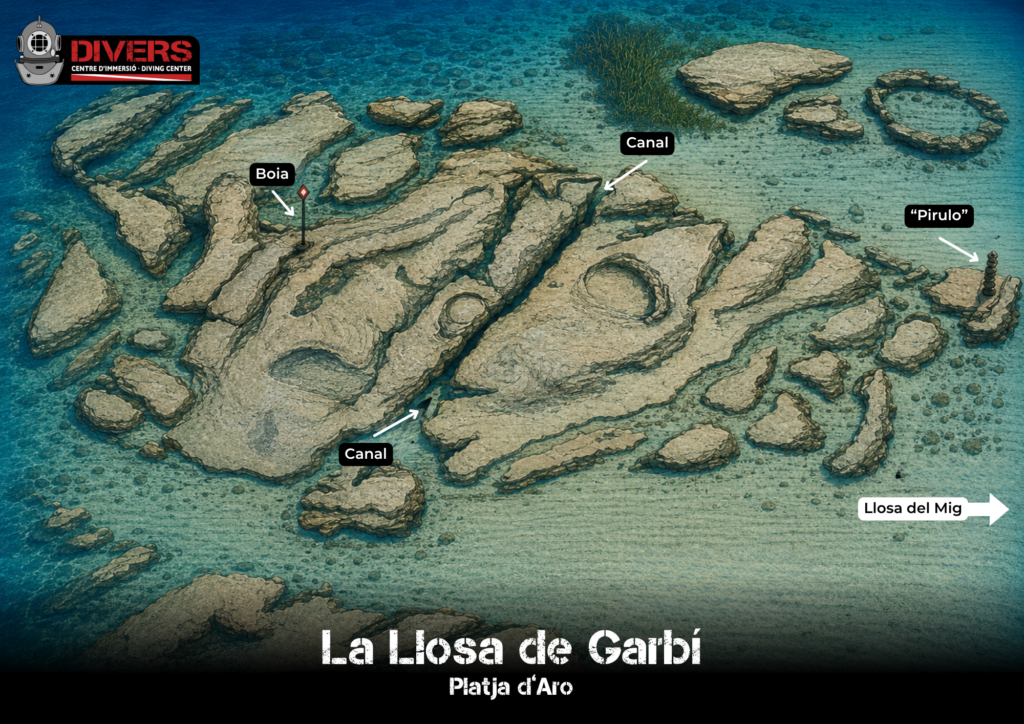
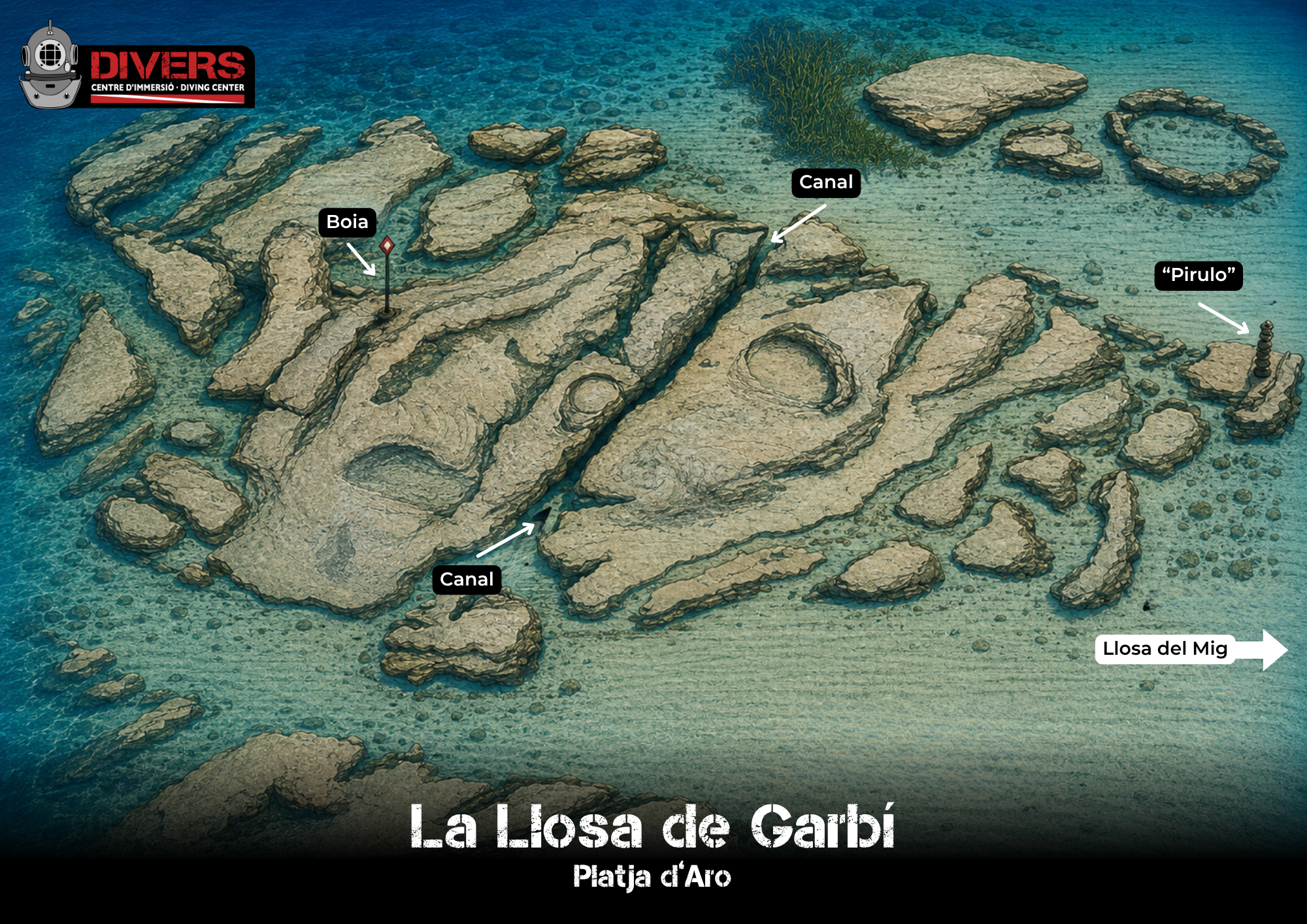
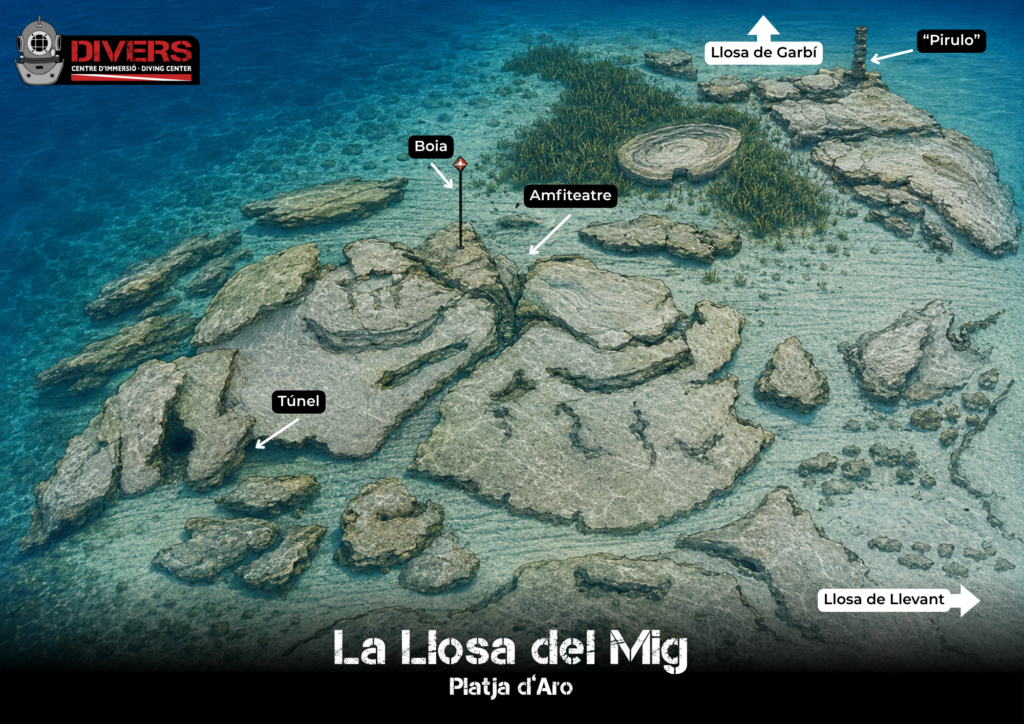
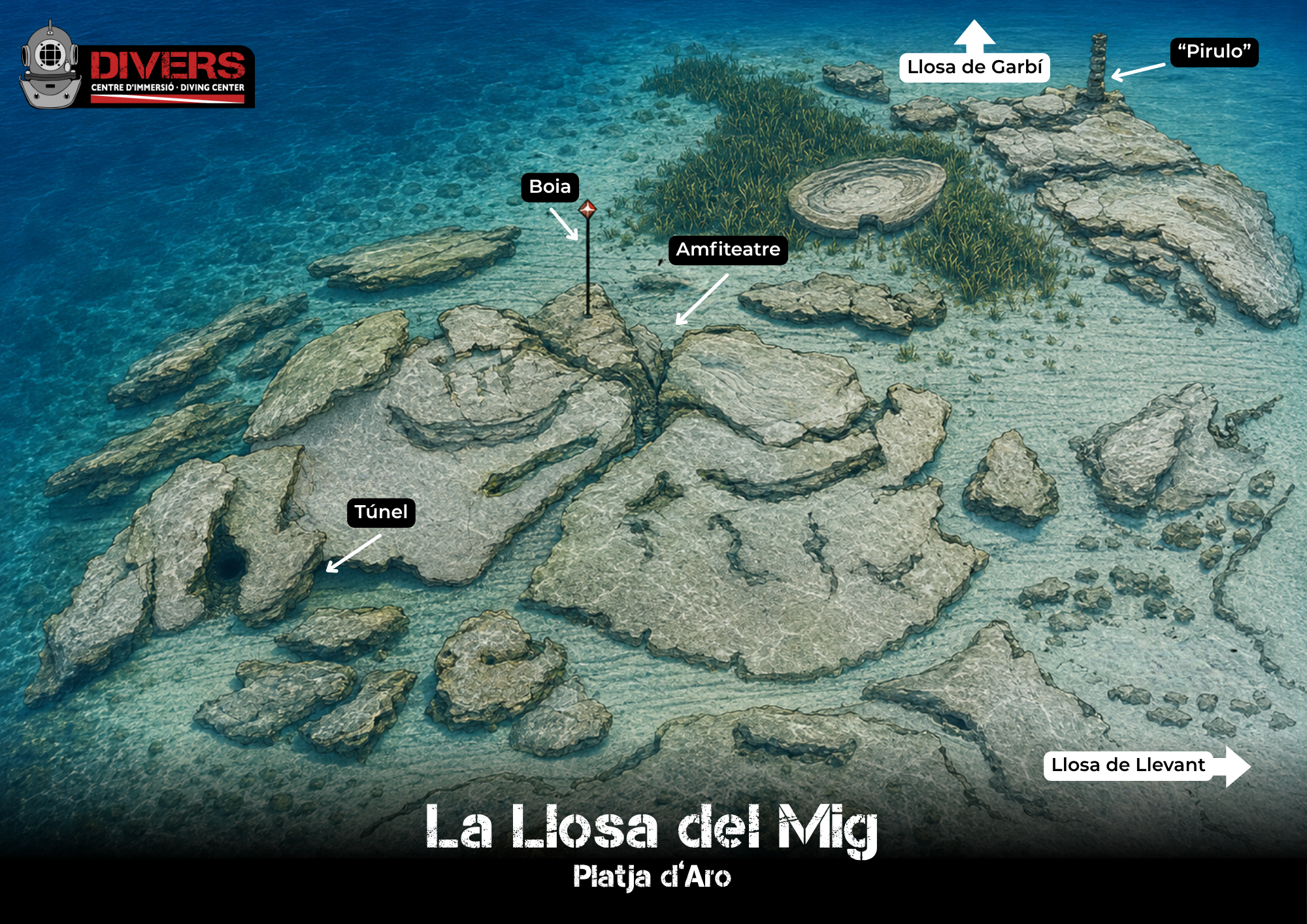
Immerse yourself in an immersion where history and nature go hand in hand in La Llosa de Levante. This immersion point, they are looking for on the Costa Brava, It has small remains of a ship that have been naturally integrated into a rocky landscape, becoming a unique refuge for a rich marine diversity. Ideal for intermediate and advanced divers, This site invites you to discover an environment full of contrasts and fascinating details.
- Location: Platja d’Aro, Costa Brava
- Minimum depth: 10 metros
- Maximum depth: 30 metros
- Recommended level: Intermediate – Advanced
- Diving type: Partial shipwreck and natural formations
Immersion characteristics
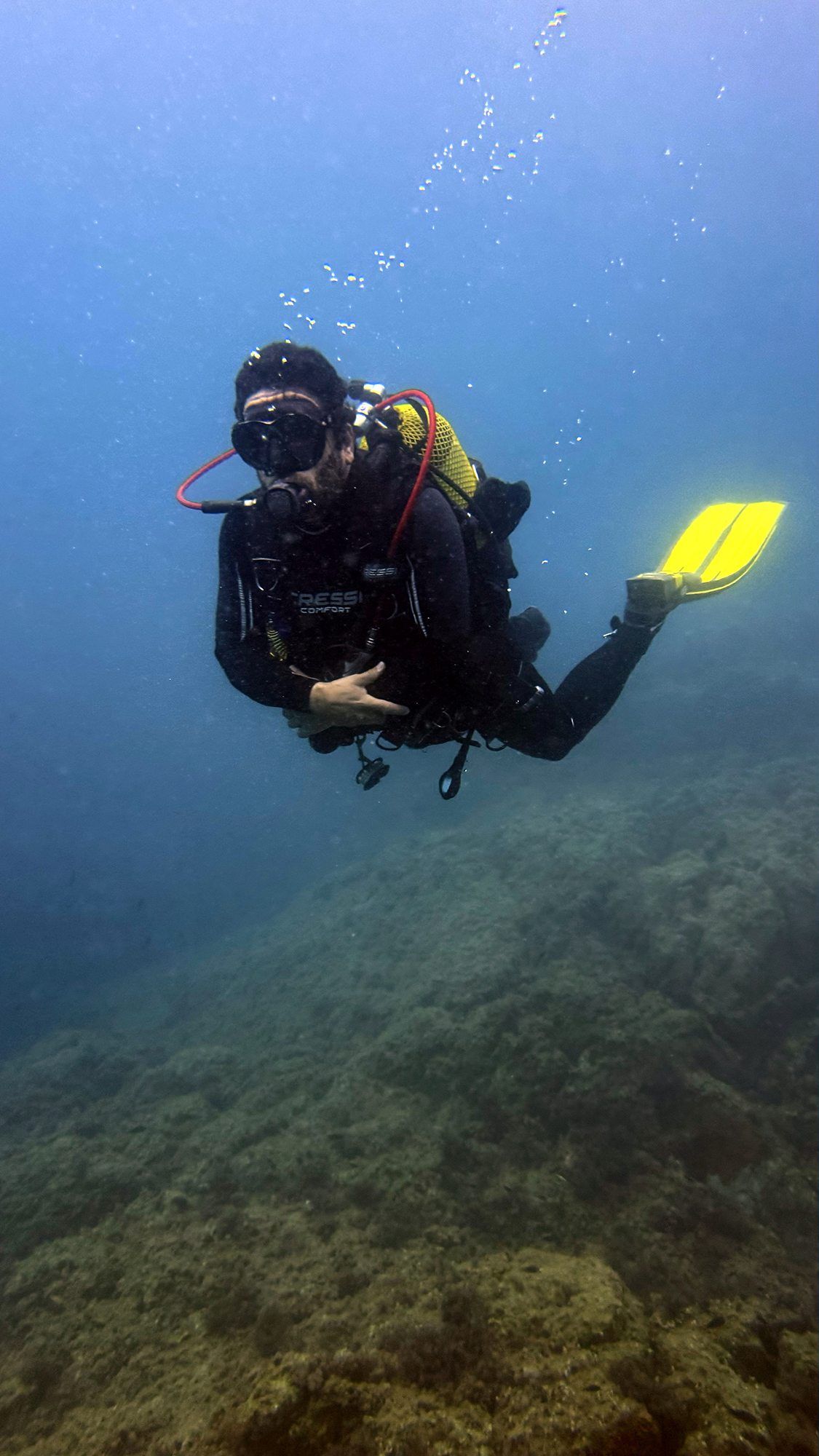
In this scenario, The rocky surface of La Llosa de Levante is combined with the remains of a ship, that still retains its historical presence. The small remains of the ship have become an integral part of the ecosystem, forming corners full of textures and details that natural light highlights with games of lighting and shadow. This contrast between the artificial element and the natural landscape makes each dive a visual and exciting experience..
Outstanding aspects
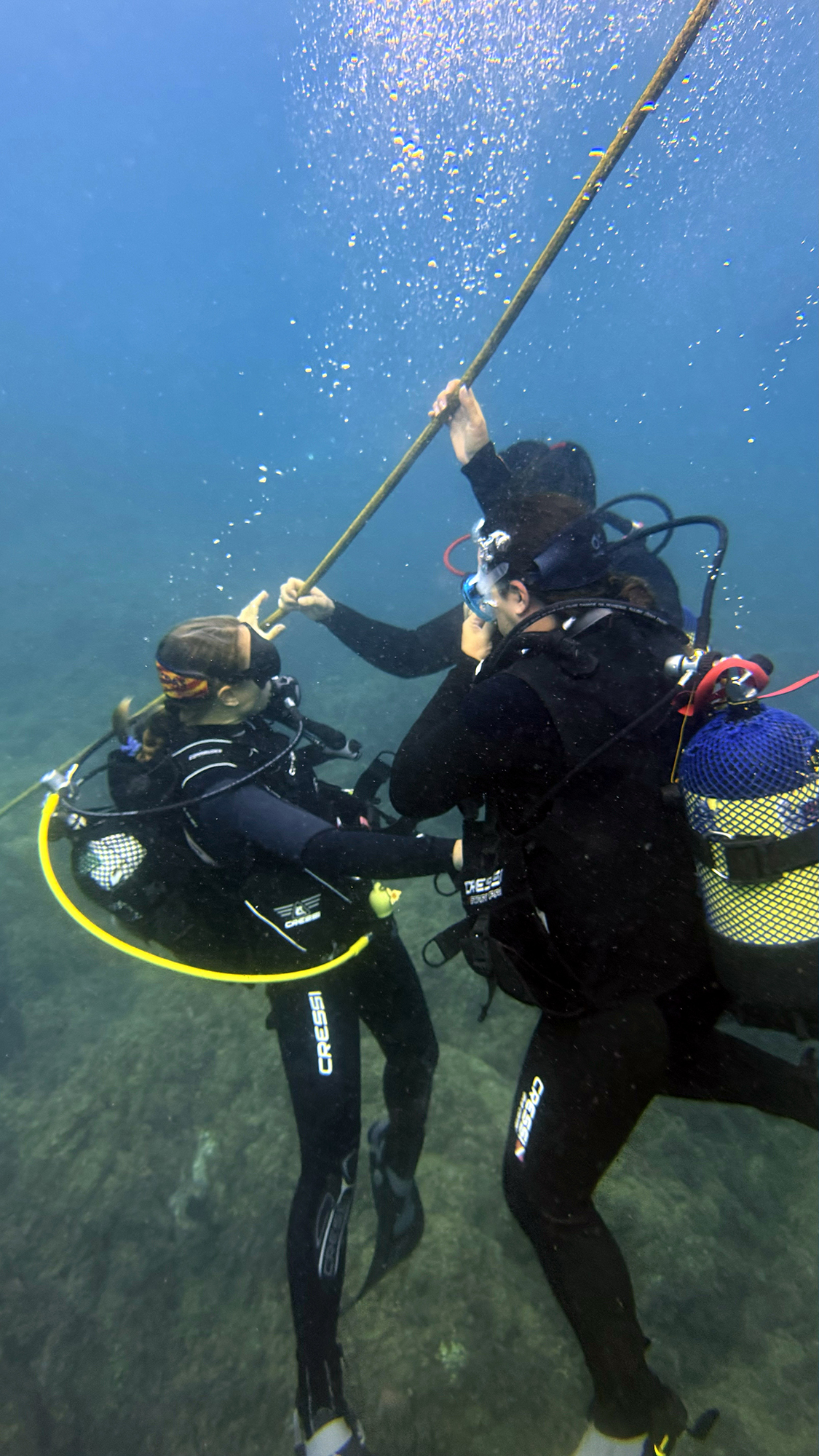
- History in contact with nature: The presence of remains of the ship creates a scene full of memory and natural charm.
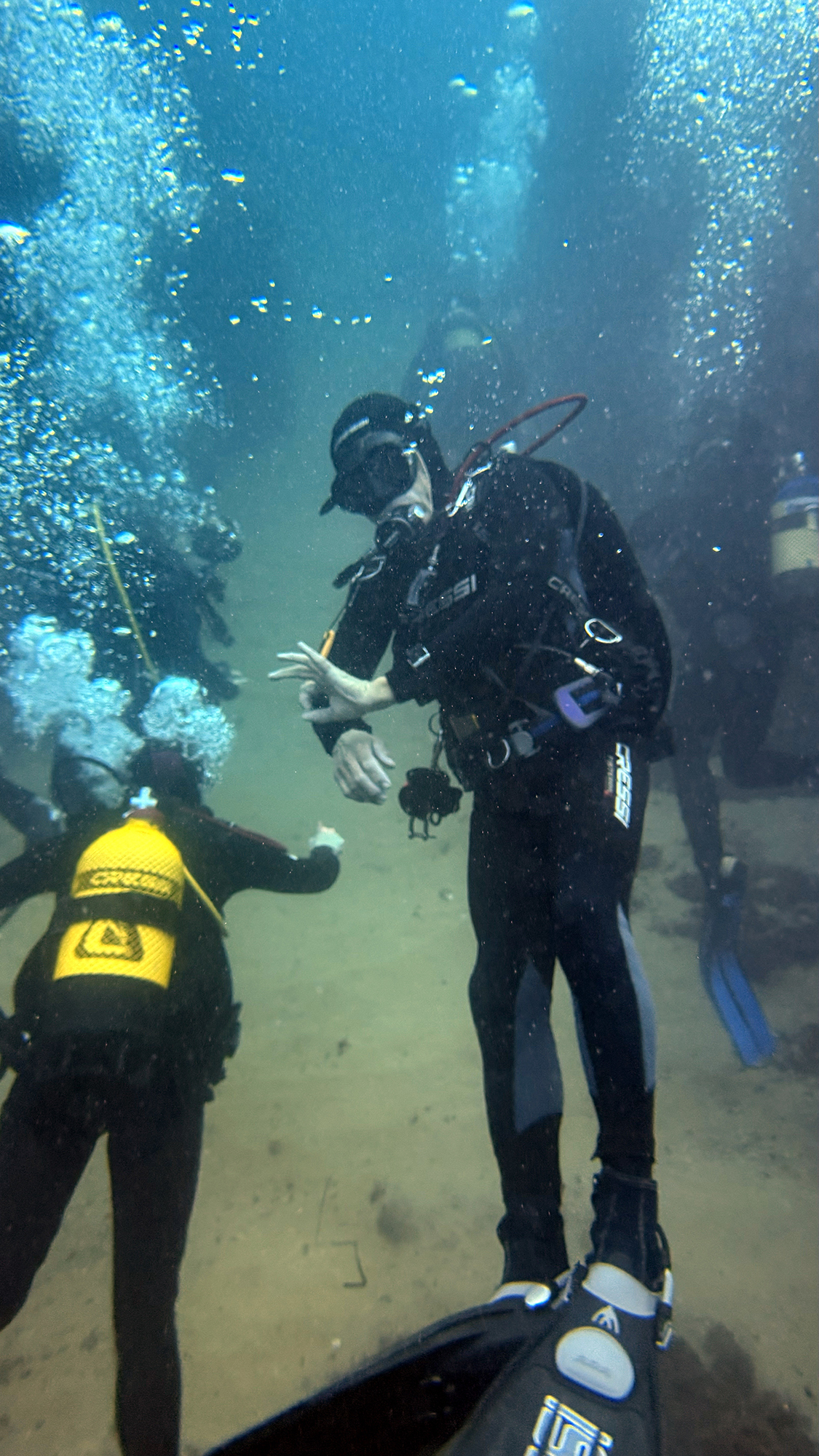
- Dynamic scenario: The interaction between the rock, the vestiges of the ship and the games of light and shadow offer changing and spectacular underwater landscapes.
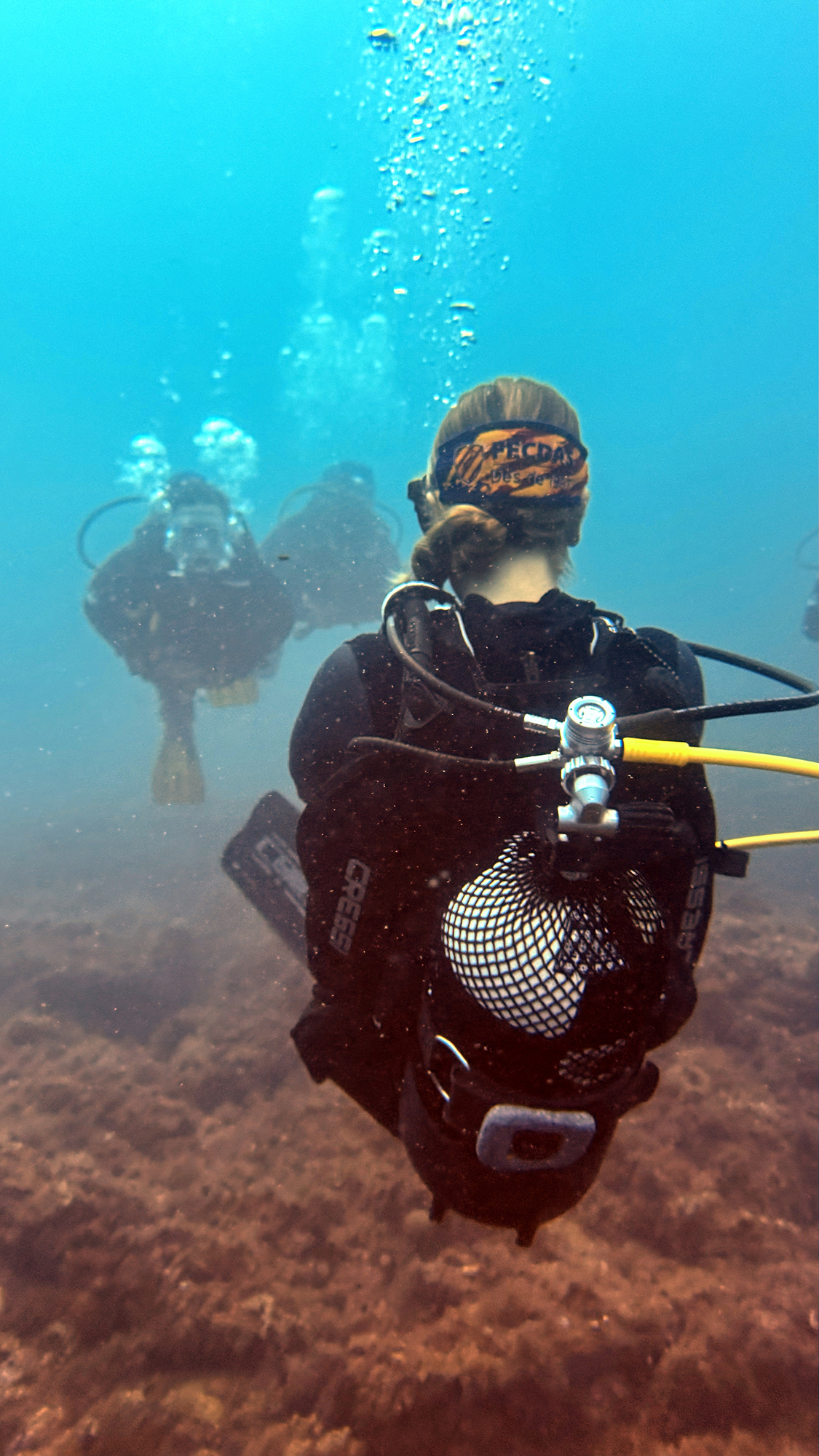
- Rich biodiversity: A vibrant habitat that is home to a wide variety of marine species, making it a point of interest for all lovers of the underwater world.
- Photo opportunities: Every corner of this environment shows unique details, perfect for capturing unforgettable images.
Marine life in La Llosa de Levant
During the dive, you will be able to observe a wide variety of marine species, among which stand out:
- Schools of Mediterranean fish that give movement to the environment.
- Rock fish and other species that hide between natural crevices.
- Mollusks and crustaceans that have colonized both the rock and the remains of the ship.
- sponges, small corals and nudibranchs, ideal for macro photography thanks to their intricate details.